Many English learners confuse Potable vs Drinkable because both words describe water that people can consume. While they are closely related, they are not always used in exactly the same situations.
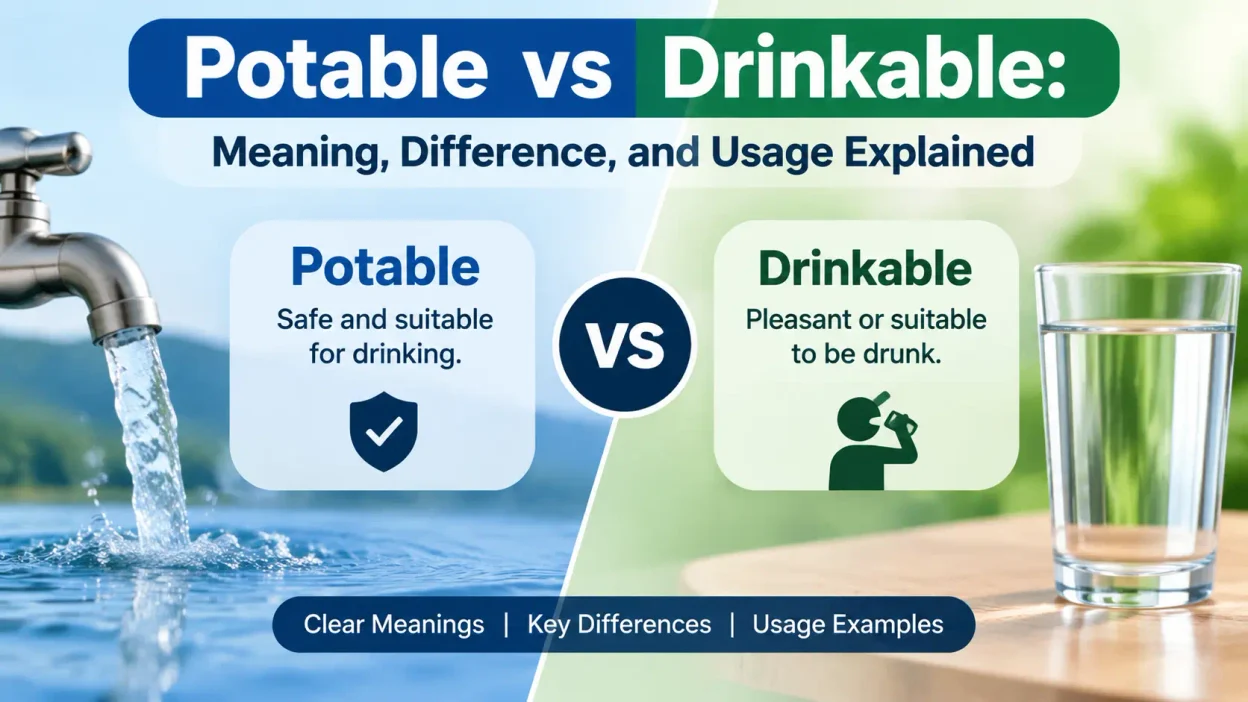
Potable is a more formal and technical word that means water is safe and suitable for human consumption. Drinkable is a more common everyday word that simply means something can be consumed as a drink.
Understanding the difference helps you choose the right word for conversations, writing, science, and public health discussions.
Quick Answer
Potable means water that is officially safe for people to drink, especially according to health and safety standards. Drinkable means something is able to be consumed as a beverage. In most everyday situations, the two words can mean the same thing, but potable sounds more formal and technical.
What Does Potable Mean?
Potable is an adjective that describes water or another liquid that is safe for human consumption.
The word is commonly used in:
- public health
- environmental science
- water treatment
- government reports
- emergency information
When authorities say a water supply is potable, they mean it has been treated and meets safety requirements.
Examples:
- The city confirmed that the tap water is potable.
- Emergency workers provided potable water after the storm.
- The campsite has a source of potable water.
In these examples, potable focuses on safety and quality standards.
What Does Drinkable Mean?
Drinkable is a more casual and widely used word meaning something is suitable to drink.
It is often used in everyday conversations about:
- water
- coffee
- tea
- beverages
- taste and quality
Something can be drinkable because it is safe, but the word does not always suggest official testing.
Examples:
- Is the water from this fountain drinkable?
- This coffee is hot but still drinkable.
- The soup is too salty, but it is still drinkable.
Drinkable focuses more on the simple idea that a person can consume something.
Potable vs Drinkable: Key Difference
| Feature | Potable | Drinkable |
|---|---|---|
| Main meaning | Safe for human consumption | Able to be consumed |
| Tone | Formal and technical | Common and casual |
| Common use | Water safety and regulations | Daily conversations |
| Focus | Health and safety standards | Ability to drink |
| Example | Potable tap water | Drinkable coffee |
Are Potable and Drinkable the Same?
In many situations, yes. If water is potable, it is usually also drinkable.
However, the words emphasize different ideas:
- Potable → “Is this water safe according to standards?”
- Drinkable → “Can I drink this?”
For example, a glass of clean tap water in a restaurant is both potable and drinkable.
A questionable water source might look drinkable but not be potable because it could contain harmful bacteria or chemicals.
When Should You Use Potable?
Use potable when talking about official safety, water systems, or technical situations.
Common phrases include:
- potable water
- potable water supply
- potable water system
- potable water treatment
Example sentences:
- The village received a new potable water system.
- The organization delivers potable water during disasters.
- Scientists tested the lake to determine whether it was potable.
In professional writing, potable is often the better choice.
When Should You Use Drinkable?
Use drinkable in normal conversations when you simply mean something can be consumed.
Example sentences:
- Is this water drinkable?
- The coffee is finally cool enough to be drinkable.
- The hotel provides free drinkable water.
For everyday speech, drinkable sounds more natural than potable.
Common Mistakes With Potable and Drinkable
Mistake 1: Thinking potable means “pleasant tasting”
Potable only means safe to drink. It does not guarantee good taste.
Example:
A city’s tap water may be potable but have a strong mineral taste.
Mistake 2: Using potable in casual conversations
Although correct, potable may sound overly formal.
Less natural:
“Can I have some potable water?”
More natural:
“Can I have some drinking water?”
Mistake 3: Assuming anything drinkable is safe
Something may technically be drinkable but not recommended.
For example, a person might say a very old beverage is “still drinkable,” but that does not mean it meets safety standards.
Potable and Drinkable in American English
In the United States, potable is mainly used in official, scientific, and technical contexts.
Americans usually say:
- “Is this water safe to drink?”
- “Is this water clean?”
- “Can I drink this?”
They use potable more often when discussing:
- water treatment plants
- emergency supplies
- plumbing systems
- environmental regulations
Synonyms for Potable
Depending on context, similar words include:
- safe to drink
- pure
- clean
- fresh
- purified
However, these words are not always exact replacements.
For example, “pure” may describe cleanliness but does not always mean officially safe for drinking.
Synonyms for Drinkable
Common alternatives include:
- consumable
- suitable to drink
- safe to drink
- usable as a beverage
The best choice depends on the situation.
Frequently Asked Questions
Is potable water safe to drink?
Yes. Potable water is specifically defined as water that is safe for human consumption. It usually meets health and safety requirements.
Is drinkable the same as potable?
Not always. Potable focuses on official safety standards, while drinkable simply means something can be consumed.
Is potable a common word in everyday English?
No. Potable is more common in technical, scientific, and official writing. Most people use phrases like “safe to drink” in casual conversations.
Can food or drinks be called potable?
Yes, but potable is most commonly used for water. Drinkable is much more common for beverages like coffee, tea, or juice.
What is the opposite of potable?
The opposite of potable is nonpotable, meaning not safe or suitable for human consumption.
Conclusion
Potable and drinkable have similar meanings, but they are used in different ways. Potable is a formal term that emphasizes safety and official standards, while drinkable is a common word that simply means something can be consumed.
For everyday conversations, drinkable or “safe to drink” usually sounds more natural. For technical writing about water quality, potable is the more precise choice.

