
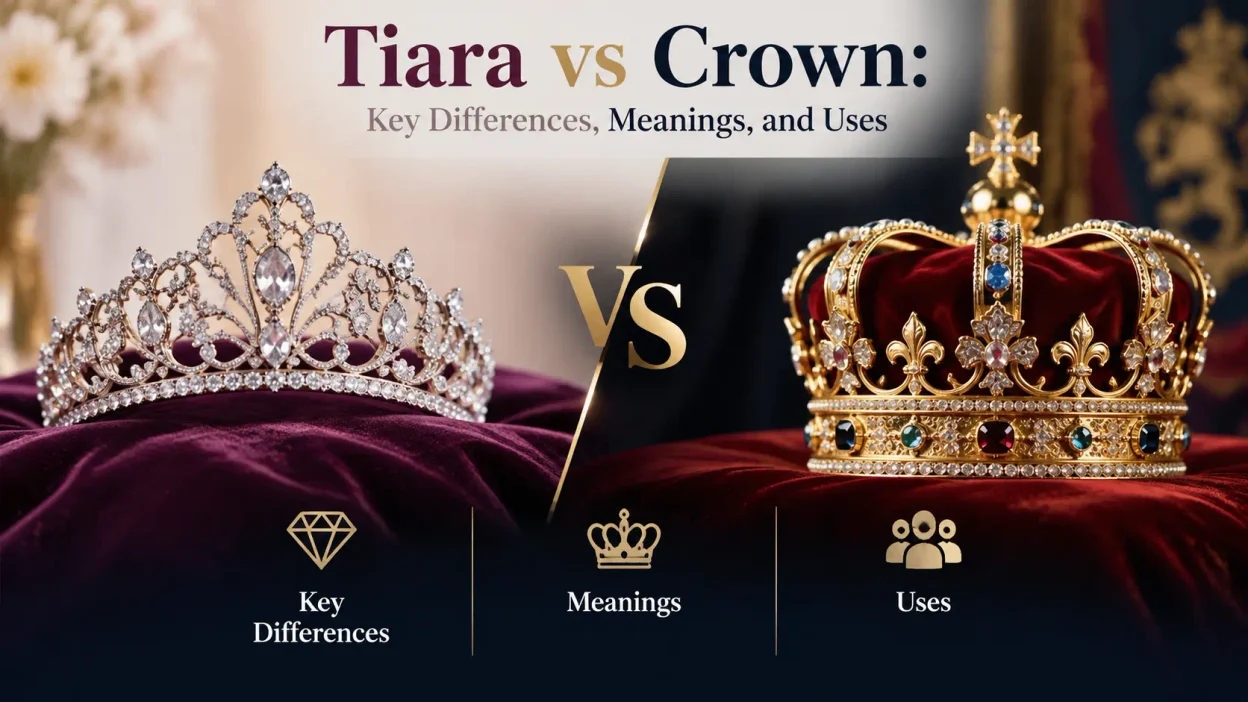
People often use Tiara vs Crown as if they mean the same thing, but they are not identical. Both are decorative headpieces associated with royalty, celebrations, and special occasions, yet they differ in design, purpose, history, and symbolism.
A tiara is usually a smaller, lighter jeweled headpiece that sits on the front or upper part of the head. A crown is generally larger, more structured, and historically connected with kings, queens, and royal authority.
Understanding the difference helps explain why a queen may wear a crown during a coronation but choose a tiara for a formal evening event.
Quick Answer
A tiara is a delicate ornamental headpiece, often worn by women for formal events, weddings, and royal occasions. A crown is a larger ceremonial symbol of authority, traditionally worn by monarchs to represent power, leadership, and sovereignty.
What Is a Tiara?
A tiara is a jeweled head ornament designed to be worn on the front of the head, often like a small arch or band. It is usually made with precious metals, diamonds, gemstones, pearls, or other decorative materials.
Tiaras are commonly associated with:
- royal families
- brides
- beauty pageants
- formal celebrations
- aristocratic events
Unlike crowns, tiaras are usually not symbols of official power. They are mainly decorative and represent elegance, beauty, tradition, or status.
Examples of Tiara Use
A bride may wear a tiara with her wedding dress as a symbol of elegance. Members of royal families may also wear tiaras at formal dinners, state events, or ceremonies.
What Is a Crown?
A crown is a ceremonial headpiece traditionally worn by rulers such as kings and queens. Throughout history, crowns have represented authority, legitimacy, and the right to rule.
Crowns are often:
- larger than tiaras
- taller and more structured
- decorated with valuable jewels
- connected to royal ceremonies
A crown is not simply an accessory. In many cultures, it carries deep political and historical meaning.
Examples of Crown Use
A monarch may wear a crown during:
- coronations
- official royal ceremonies
- important national events
The crown often represents the institution of monarchy rather than only the person wearing it.
Tiara vs Crown: Main Differences
| Feature | Tiara | Crown |
|---|---|---|
| Main purpose | Decoration and elegance | Symbol of authority and rule |
| Size | Usually smaller and lighter | Usually larger and heavier |
| Common wearers | Brides, royals, pageant winners | Kings, queens, monarchs |
| Design | Open-front jeweled design | Full circular or structured design |
| Symbolism | Beauty, tradition, status | Power, leadership, sovereignty |
Design Differences Between a Tiara and a Crown
The biggest visual difference is the structure.
A tiara usually has an open design. It often looks like a jeweled half-circle that rests on the front of the head. Many tiaras are delicate and designed to complement clothing rather than dominate the appearance.
A crown usually has a complete shape around the head. Many crowns include arches, crosses, points, or tall sections that make them appear more powerful and formal.
Historical Origins of Tiaras
The word tiara has ancient roots and has been used to describe different types of head coverings throughout history. Over time, European royalty developed the modern jeweled tiara as a fashionable accessory for aristocratic women.
During the 18th and 19th centuries, tiaras became especially popular among European royal families. They were often created from family jewels and passed down through generations.
Today, many famous tiaras remain part of royal collections and are worn at important occasions.
Historical Origins of Crowns
Crowns have existed for thousands of years across many civilizations. Ancient rulers used decorated headpieces to show their connection to leadership, religion, and political power.
Different cultures created their own crown traditions. Some crowns represented military success, while others symbolized divine approval or royal inheritance.
In modern times, crowns are still strongly connected with monarchies, although their use is often ceremonial rather than political.
Why Do People Confuse Tiaras and Crowns?
The confusion happens because both are:
- worn on the head
- decorated with jewels
- associated with royalty
- used in ceremonies
Popular culture also uses the words loosely. Movies, cartoons, and pageants sometimes call any decorative royal headpiece a “crown,” even when it is technically a tiara.
However, in historical and royal contexts, the difference matters.
Can a Queen Wear a Tiara Instead of a Crown?
Yes. Queens and other royal family members often wear tiaras instead of crowns for many formal occasions.
A crown is usually reserved for major ceremonies because of its symbolic importance. A tiara is more practical and comfortable for events such as:
- state dinners
- diplomatic receptions
- royal celebrations
For example, a royal figure may wear a diamond tiara with an evening gown but wear a crown during a coronation ceremony.
Tiara vs Crown in Modern Culture
Today, both words appear outside royal settings.
Tiara
Modern uses include:
- wedding accessories
- beauty pageant prizes
- costume jewelry
- fantasy characters
The word “tiara” often suggests elegance and femininity.
Crown
Modern uses include:
- graduation crowns
- achievement symbols
- logos
- costumes
- decorative items
The word “crown” often suggests success, achievement, or leadership.
Common Mistakes
Mistake 1: Calling Every Royal Headpiece a Crown
Incorrect: The princess wore a crown at the wedding.
Better: The princess wore a tiara at the wedding.
A smaller jeweled headpiece worn for style is usually a tiara.
Mistake 2: Assuming Tiaras Have No Royal Connection
Some people think tiaras are only for brides or pageants. However, royal families have long used tiaras as important ceremonial jewelry.
Mistake 3: Thinking Crowns Are Only Decorative
Crowns can be beautiful, but their main meaning is symbolic. They represent authority, tradition, and leadership.
Related Terms
Diadem
A diadem is another type of royal headband or crown-like ornament. The term is often used in historical discussions of rulers.
Coronation
A coronation is a ceremony where a monarch is officially crowned and recognized as a ruler.
Regalia
Regalia refers to the special objects connected with royalty, including crowns, scepters, and ceremonial clothing.
Frequently Asked Questions
Is a tiara a type of crown?
A tiara can be considered a type of decorative crown-like headpiece, but it is not usually a royal crown. Tiaras are mainly worn for beauty and ceremony, while crowns symbolize authority.
Do men wear tiaras?
Traditionally, tiaras are more commonly associated with women. However, some cultures and modern designs may use similar decorative headpieces for different genders.
Which is more valuable, a tiara or a crown?
The value depends on the materials, history, and craftsmanship. Some tiaras contain extremely valuable diamonds and gemstones, while royal crowns may have greater historical importance.
Why do brides wear tiaras?
Brides often wear tiaras because they symbolize elegance, celebration, and a special occasion. They are also connected with traditional ideas of beauty and royalty.
Is a crown always worn by a king or queen?
No. Crowns can also appear in ceremonies, costumes, logos, and symbolic designs. However, the traditional meaning of a crown is strongly linked with rulers.
Conclusion
The difference between a tiara and a crown comes down to purpose, design, and symbolism. A tiara is usually a delicate decorative headpiece associated with elegance and formal occasions. A crown is a more powerful symbol connected with royalty, leadership, and authority.
Although the two terms are sometimes used interchangeably in everyday speech, understanding the distinction reveals why each headpiece has its own unique place in history and culture.