
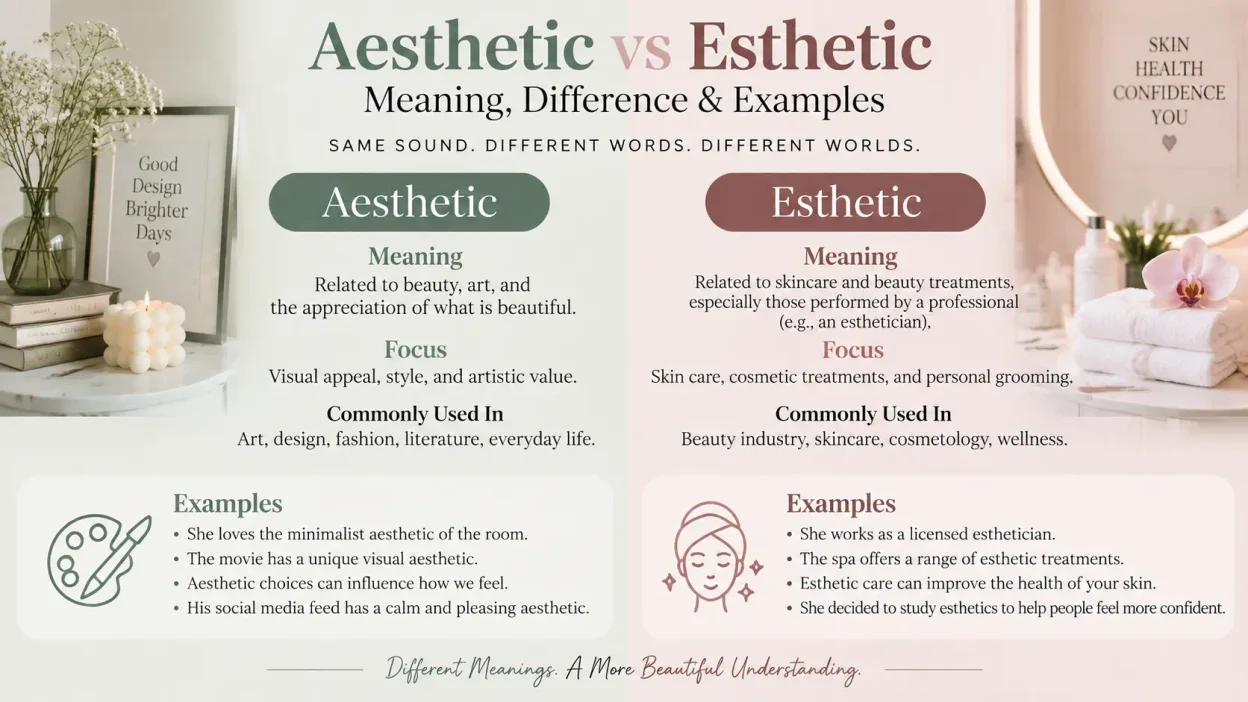
Aesthetic vs Esthetic are two spellings of the same basic word. Both describe ideas related to beauty, appearance, artistic value, and the way people experience or judge what looks pleasing. The main difference is not meaning but usage and regional preference.
In modern American English, aesthetic is much more common and appears in everyday conversations, art discussions, design, fashion, and social media. Esthetic is a less common spelling that is sometimes used in academic, medical, or specialized contexts.
Quick Answer
Aesthetic and esthetic have the same meaning: relating to beauty, artistic style, or the appreciation of beauty. Aesthetic is the standard spelling used most often in the United States, while esthetic is a less common variant that appears in some formal or specialized writing.
What Does Aesthetic Mean?
Aesthetic is an adjective that describes something connected to beauty, art, style, or visual appeal.
It can describe:
- the beauty of an object
- a person’s sense of style
- artistic choices
- the overall look or feeling of a place
Examples:
- The restaurant has a modern aesthetic with simple furniture and soft lighting.
- She has a unique fashion aesthetic.
- The painting has strong aesthetic value.
The word can also be used as a noun when talking about a specific style or visual identity.
Example:
- The cottagecore aesthetic became popular online.
What Does Esthetic Mean?
Esthetic has the same meaning as aesthetic. It also relates to beauty, artistic appreciation, or appearance.
However, esthetic is less common in everyday English.
It may appear in:
- academic writing
- philosophy
- discussions of beauty theory
- some professional fields
Examples:
- The researcher studied the esthetic qualities of ancient architecture.
- The designer focused on the esthetic impact of the building.
In most general writing, many readers expect the spelling aesthetic instead.
Aesthetic vs Esthetic: Key Difference
| Feature | Aesthetic | Esthetic |
|---|---|---|
| Meaning | Related to beauty, art, and appearance | Related to beauty, art, and appearance |
| Common in US English | Very common | Less common |
| Everyday use | Yes | Rare |
| Social media use | Very common | Uncommon |
| Academic use | Common | Sometimes used |
| Spelling style | Preferred modern spelling | Alternative spelling |
Why Are There Two Spellings?
The difference comes from the history of the word.
Both forms come from the Greek word aisthētikos, meaning related to perception or sensation. English developed two spelling forms over time.
The spelling aesthetic keeps a connection to the original Greek spelling through the “ae” combination. The shorter form esthetic removes the first letter but keeps the same meaning.
Today, both are considered correct, but their popularity differs depending on region and context.
Which Spelling Is More Common in American English?
In the United States, aesthetic is the preferred and widely recognized spelling.
People commonly use it in:
- fashion
- interior design
- photography
- branding
- art
- social media
Examples:
- “I love the minimalist aesthetic of this room.”
- “Her Instagram has a vintage aesthetic.”
The spelling esthetic may look unusual to many American readers because it appears much less often.
How to Use Aesthetic Correctly
As an Adjective
Use aesthetic to describe beauty or appearance.
Examples:
- The museum offers an aesthetic experience.
- The building has aesthetic appeal.
- They made aesthetic improvements to the website.
As a Noun
Use aesthetic to describe a particular style or visual identity.
Examples:
- Her aesthetic is colorful and creative.
- The brand created a luxury aesthetic.
Common Uses of Aesthetic
Art and Design
Aesthetic often describes artistic quality.
Example:
- The artist explored the aesthetic meaning of nature.
Fashion
It describes a person’s style or appearance.
Example:
- His streetwear aesthetic combines vintage and modern clothing.
Online Culture
On social media, people often use aesthetic to describe a recognizable visual style.
Examples:
- dark academia aesthetic
- minimalist aesthetic
- vintage aesthetic
Common Mistakes
Mistake 1: Thinking They Have Different Meanings
Incorrect:
- Aesthetic means beauty, but esthetic means something different.
Better:
- Aesthetic and esthetic have the same meaning. The difference is mainly spelling and usage frequency.
Mistake 2: Using Esthetic in Casual Writing
Incorrect:
- Her room has a beautiful esthetic.
Better:
- Her room has a beautiful aesthetic.
While “esthetic” is not wrong, “aesthetic” sounds more natural in most everyday situations.
Mistake 3: Using Aesthetic Only for Visual Beauty
Aesthetic can describe more than appearance.
It can also relate to:
- artistic experience
- emotional response
- creative style
- appreciation of beauty
Example:
- The music created an aesthetic experience.
Aesthetic and Esthetic Pronunciation
Both words are usually pronounced the same.
Common pronunciation:
aesthetic / esthetic
es-THET-ik
The stress falls on the second syllable.
Synonyms for Aesthetic and Esthetic
Depending on context, similar words include:
- beautiful
- artistic
- attractive
- stylish
- elegant
- visually pleasing
- tasteful
However, these words are not always exact replacements.
For example:
- “beautiful” describes appearance.
- “aesthetic” can describe a whole style, philosophy, or artistic approach.
Aesthetic vs Esthetic in Professional Writing
For general American readers, aesthetic is usually the safer choice.
Use aesthetic in:
- websites
- blogs
- marketing
- design writing
- everyday communication
Use esthetic only when following a specific style guide or professional convention that prefers it.
Frequently Asked Questions
Is aesthetic and esthetic the same thing?
Yes. Both words have the same meaning and describe beauty, artistic value, or appearance. The main difference is spelling preference.
Is aesthetic the correct spelling in American English?
Yes. Aesthetic is the much more common spelling in American English and is usually the preferred choice.
Is esthetic wrong?
No. Esthetic is a valid spelling variant. However, it is less common and may seem unusual in everyday writing.
Can aesthetic be used as a noun?
Yes. Aesthetic can describe a particular style or visual identity, such as a fashion aesthetic or design aesthetic.
Why does aesthetic have an extra “a”?
The spelling comes from the Greek origin of the word. English kept the “ae” spelling in the more common form, while esthetic developed as a shorter variant.
Conclusion
Aesthetic and esthetic mean the same thing: related to beauty, artistic value, and appearance. The important difference is usage, not definition.
For most American English writing, aesthetic is the preferred spelling because it is more familiar, widely used, and natural in everyday communication. Esthetic remains a correct but less common alternative.